
Anthony Di Iorio
Ethereum co-founder, Toronto Bitcoin meetup organizer, and Bitcoin Decentral founder

Anthony Di Iorio was one of Ethereum's earliest organizers, funders, and public-facing founders. Before Ethereum, he helped build Toronto's Bitcoin scene from scratch through the Toronto Bitcoin Meetup, the Bitcoin Alliance of Canada, wallet projects including Rush Wallet and KryptoKit, and Bitcoin Decentral, the Toronto hub where Ethereum first operated.
Background
In his own telling, Di Iorio's path to crypto began with two separate rabbit holes that converged in 2012: decades of interest in computers and decentralized technology, and a deep study of money, central banking, and Austrian economics following the 2008 financial crisis.
He has described hearing about Bitcoin through Free Talk Live in mid-2012 and feeling that he "got it right away." By then he had already sold Canadian real estate, was sitting on cash, and was looking for a technology aligned with the liberty-oriented worldview he had developed through studying Peter Schiff, monetary history, and the Free State movement.
Toronto Bitcoin Meetup
When Di Iorio went looking for a Bitcoin community in Toronto in 2012, he found there effectively wasn't one, so he started it himself.
His first meetup at Pauper's Pub in November 2012 drew only a handful of people, but it included Vitalik Buterin, Peter Todd, and others who would remain important in the Canadian Bitcoin scene. The meetup later became a weekly fixture and grew into one of the main centers of Bitcoin activity in Toronto.
This mattered for Ethereum because the meetup became the place where Di Iorio and Vitalik got to know each other in person over time, before the white paper and before the Ethereum team had taken shape.
Satoshi Circle and Funding Ethereum
One of Di Iorio's first Bitcoin businesses was Satoshi Circle, a provably fair gambling product he built with Steve Dakh in early 2013. After launching it with a small cash investment, he later bought Dakh out and sold the business for thousands of bitcoin.
In his own interview, Di Iorio says directly that this was the money that funded Ethereum's earliest bootstrapping:
"That's the actual money that funded Ethereum."
That claim is one of the most important additions from his own episode, because it sharpens a point that earlier interviews only implied: before Joe Lubin put in significant money, Di Iorio's Satoshi Circle proceeds helped keep the project alive.
Bitcoin Alliance and Wallet Projects
In 2013, Di Iorio founded the Bitcoin Alliance of Canada, deliberately trying to avoid what he saw as the overly American and insufficiently decentralized structure of the Bitcoin Foundation. He built the alliance through national outreach, a public board-selection process, and active media and government engagement.
At the same time, he was building Bitcoin wallet products. Rush Wallet led into KryptoKit, which later led into Jaxx. These products reflected Di Iorio's strong preference for non-custodial tools and low-friction interfaces. He has argued that wallets were the browser equivalent for crypto: the user-facing gateway through which ordinary people would interact with decentralized systems.
Vitalik contributed to some of this wallet work, and Di Iorio's relationship with him deepened during this period through meetups, conferences, and Bitcoin Magazine interviews.
Bitcoin Decentral
In late 2013, Di Iorio rented a commercial space near King and Spadina in Toronto and turned it into Bitcoin Decentral. It served at once as meetup venue, coworking space, media hub, startup office, and early Ethereum home base.
The space housed KryptoKit, CoinTalk, the Toronto Bitcoin Meetup, Bitcoin Alliance activity, and Ethereum itself. It also hosted the first Canadian-made Bitcoin ATM from BitAccess.
Bitcoin Decentral was where Joseph Lubin first entered the Ethereum orbit. Di Iorio recalled that Lubin happened to attend the January 1, 2014 launch event while visiting Toronto for the holidays, was invited back by Vitalik, and then joined the group on the trip to Miami.
Bringing the Team Together
Di Iorio's role in Ethereum's earliest months was not primarily as a protocol developer. It was organizational and connective. He provided money, space, introductions, and momentum.
By his own account, he showed the Ethereum white paper to Charles Hoskinson after deciding he wanted validation from someone he already knew through Bitcoin advocacy work. He also paid for Gavin Wood to come to Miami after Vitalik told him there was a promising developer in the UK who could not afford the trip.
He has consistently described the first core group as five people: himself, Vitalik, Mihai Alisie, Charles Hoskinson, and Amir Chetrit. Gavin, Joe, and Jeff Wilcke were then added, bringing the founder count to eight.
Miami and the Toronto Vision
In January 2014, Di Iorio rented the Miami house that became the physical gathering point for many early Ethereum contributors during the North American Bitcoin Conference where Vitalik first publicly announced Ethereum.
Taylor Gerring later described the importance of the house:
"The house that Anthony Di Iorio had organized became kind of the hub and the central place where we all gathered around…" — Taylor Gerring
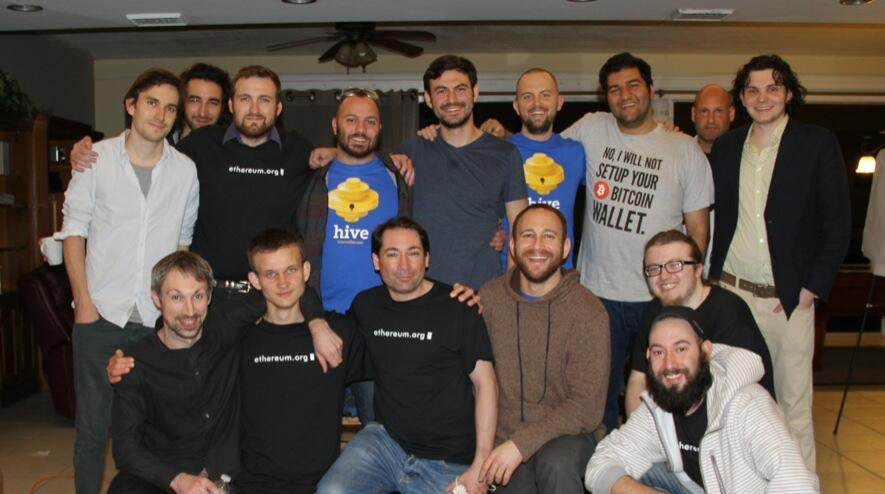
(The Ethereum team in their Miami house rented by Anthony Di Iorio for the 2014 Bitcoin conference. Top row: Dino Mark, Yanislav Malahov, Charles Hoskinson, Anthony D'Onofrio, Steve Dakh, Wendell Davis, Jonathan Mohan, Joseph Lubin, [REDACTED]. Bottom row: Gavin Wood, Vitalik Buterin, Anthony Di Iorio, Taylor Gerring, Jason Colby, Kyle Kurbegovich - from Taylor Gerring's photos)
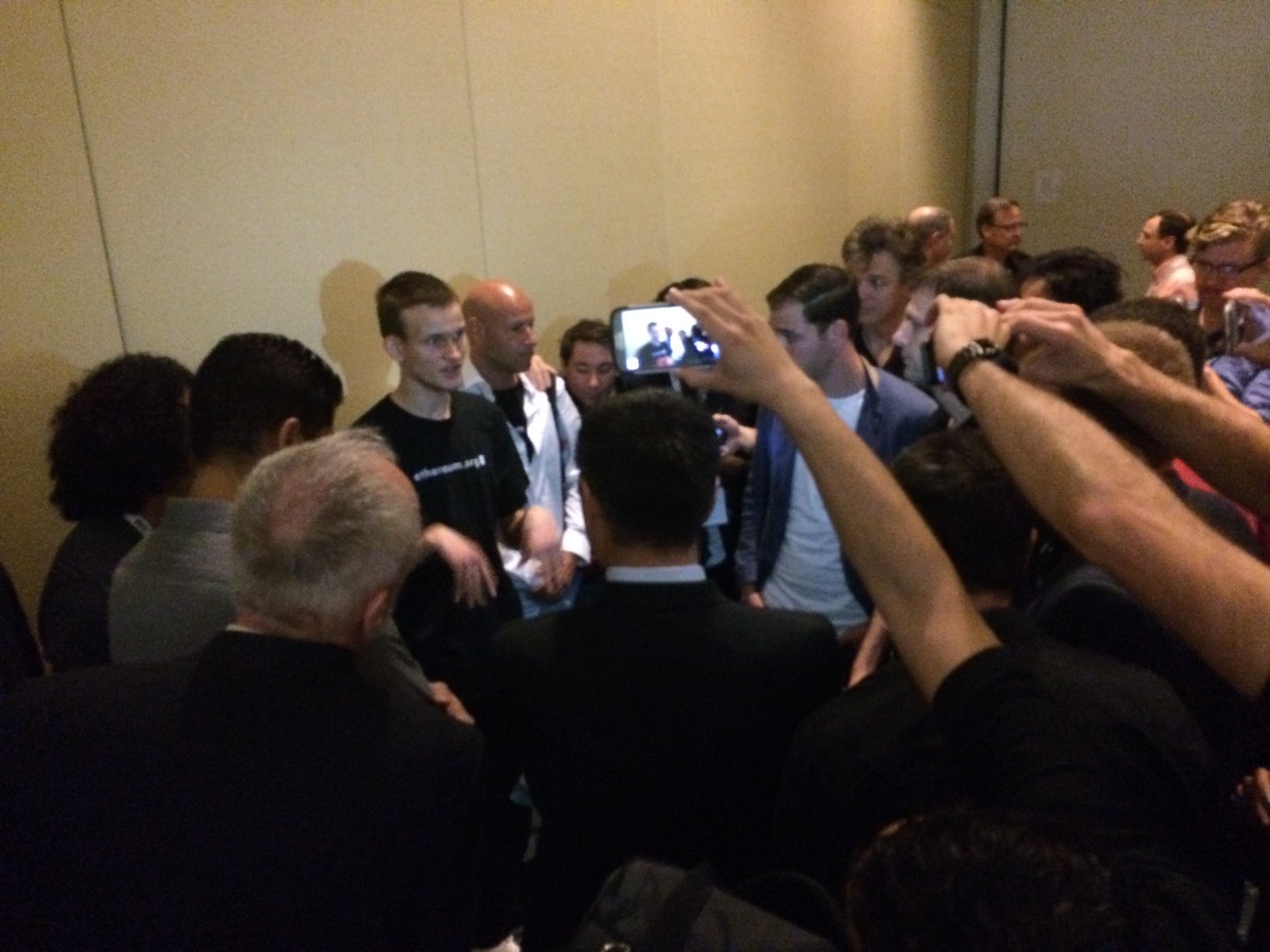
(Joe Lubin and Anthony Di Iorio can be seen next to Vitalik as the crowd encroaches - 26th January 2014. From Taylor Gerring's photos)
Di Iorio's expectation at that stage was that Ethereum would grow out of Toronto. In February 2014 he incorporated Ethereum Canada Inc., reflecting his belief that Ethereum development would be centered around Bitcoin Decentral and the Toronto team.
As Bob Summerwill later summarized:
"His thought, I guess, was everything was going to happen out of Toronto, but that didn't happen." — Bob Summerwill
Delaying the Presale
One of the most useful contributions from Di Iorio's own interview is his account of the planned early launch timeline. According to him, the team initially expected to move much faster after Miami, but pulled back when it became clear the amount raised could be far larger than they had anticipated.
He credits Amir Chetrit with forcing a pause and insists that delaying the sale until the legal structure was more thought through was essential. In his framing, a core tension of early 2014 was speed versus doing things properly: people needed money, but the team also needed to avoid building the project on a legally reckless foundation.
Bitcoin Expo 2014
In April 2014, Di Iorio organized Bitcoin Expo 2014 in Toronto through the Bitcoin Alliance of Canada. Ethereum was the main sponsor, and the event became one of the key public moments in the project's pre-launch history.

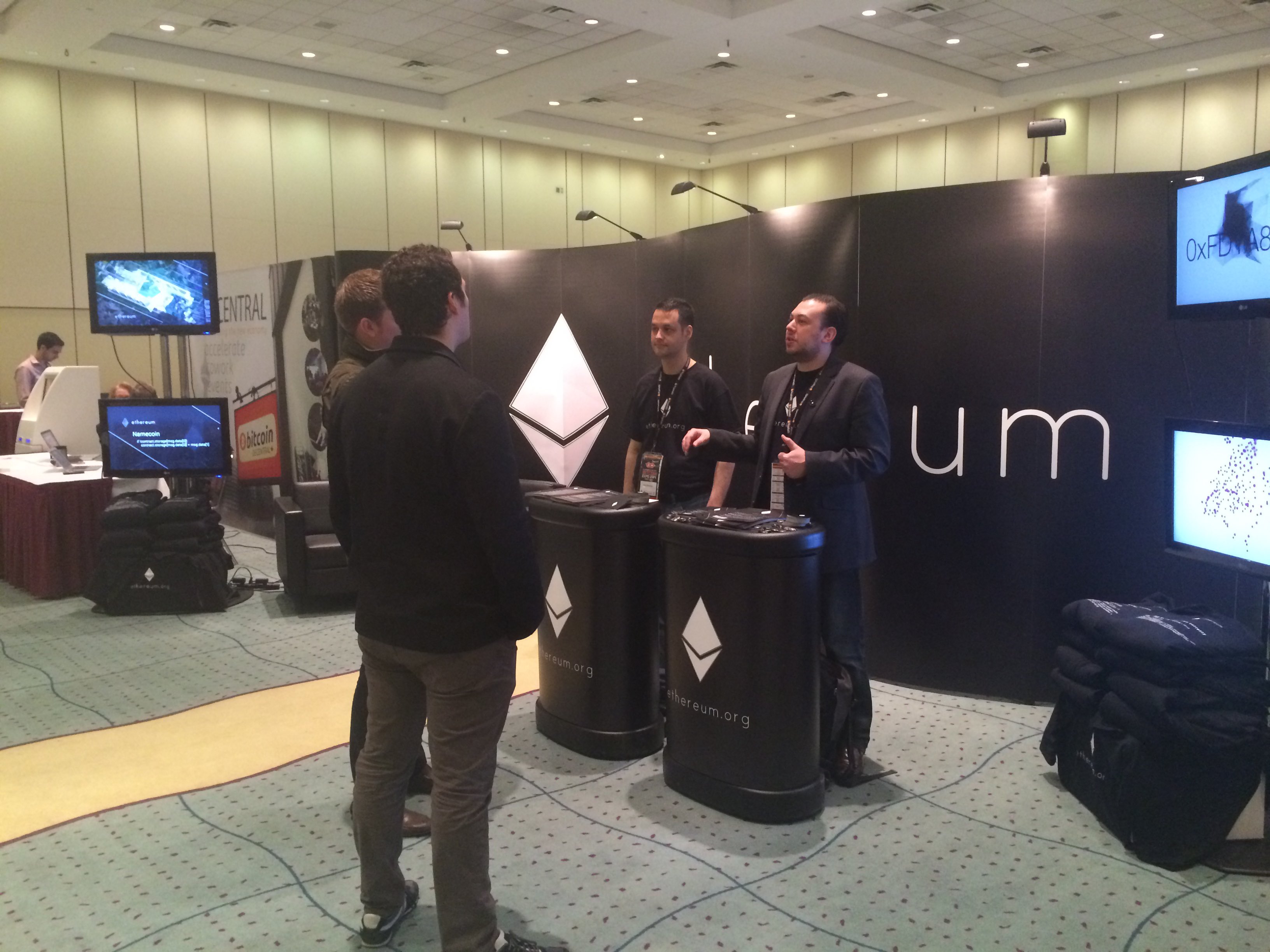
(From Taylor Gerring's photos)
Bob Summerwill described the arrangement this way:
"He'd got the space. He was the head of the Bitcoin Association of Canada. The Bitcoin Association were running the conference. Ethereum were the main sponsor for the conference." — Bob Summerwill
Di Iorio himself said in Episode 16 that he considers Bitcoin Expo "the first Ethereum event."
Zug, the Red Wedding, and the Foundation
Di Iorio traveled to Switzerland in 2014 expecting to help formalize the legal structure that had been discussed by the founders. Instead, he became one of the central witnesses to the conflict later called the "Red Wedding."
His own recollection emphasizes two things. First, he believed the project had originally been heading toward a for-profit structure before the decision shifted toward a non-profit foundation. Second, he saw the June 2014 rupture as the point at which the balance of power changed decisively away from the original business-oriented founders and toward a more development-led structure.
He later said that both he and Joe Lubin "saw the writing on the wall" after that moment, even though both survived the immediate purge.
Legacy
Di Iorio's legacy in Ethereum is easiest to see in the physical and organizational infrastructure of the pre-foundation period. He built the Toronto scene in which Vitalik emerged, created the space where Ethereum first operated, brought key people together, paid for crucial early activity, and helped carry the project through the months before the sale.
Even where later narratives focused more on protocol architects or Swiss legal entities, Di Iorio remained one of the people who made the project concrete in the world before it had funding, office structure, or institutional legitimacy.
Primary Sources
This profile draws from multiple Early Days of Ethereum interviews and related materials:
Back-links
Other pages that reference this:
- CoinTalk 013 - Bitcoin Decentral Launch Party! (Videos, January 03, 2014)
- Taylor Gerring Photos (Articles, January 25, 2014)
- Ethereum Canada Inc. (Articles, February 01, 2014)
- CoinTalk 015 – BTCMiami Debate Featuring Ethereum, Mastercoin and Bitshares (Videos, February 06, 2014)
- Bitcoin Expo 2014 (Articles, April 11, 2014)
- "Red Wedding" (Articles, June 07, 2014)
- The Great Deletion (Articles, August 19, 2014)
- Ethereum Foundation is hiring an Executive Director (Articles, April 08, 2015)
- Early Days of Ethereum - Episode 1 (Videos, August 28, 2023)
- Early Days of Ethereum - Episode 3 - Bob Summerwill (Videos, November 14, 2023)
- Early Days of Ethereum - Episode 4 - Taylor Gerring (Videos, August 08, 2025)
- Early Days of Ethereum - Episode 5 - Anthony 'Texture' D'Onofrio (Videos, September 03, 2025)
- Early Days of Ethereum - Episode 8 - Michael Parenti (Videos, December 17, 2025)
- Early Days of Ethereum - Episode 9 - Amir Taaki (Videos, December 31, 2025)
- Early Days of Ethereum - Episode 11 - Ryan Taylor (Videos, February 04, 2026)
- Museum of Ethereum walkthrough (Videos, March 13, 2026)
- Early Days of Ethereum - Episode 16 - Anthony Di Iorio (Videos, May 16, 2026)
- Addison Cameron Huff (People)
- Amir Chetrit (People)
- Amir Taaki (People)
- Anthony D Onofrio (People)
- Bob Summerwill (People)
- Cameron Gray (People)
- Charles Hoskinson (People)
- Dino Mark (People)
- Gavin Wood (People)
- James Hormuzdiar (People)
- Jason Colby (People)
- Jeff Wilcke (People)
- Joe Lubin (People)
- Jonathan Mohan (People)
- Kieren James Lubin (People)
- Kyle Kurbegovich (People)
- Michael Perklin (People)
- Mihai Alisie (People)
- Peter Todd (People)
- Richard Goldglass (People)
- Ryan Taylor (People)
- Steve Dakh (People)
- Taylor Gerring (People)
- Victor Wong (People)
- Vitalik Buterin (People)
- Wendell Davis (People)
- William Mougayar (People)
- Yanislav Malahov (People)